

“How should I train for backcountry skiing?”

Updated: 5 days ago
In addition to completing his Nortind ski guide qualification this year, Daniel works as a senior researcher with a PhD in public health. He has a 4-year degree in kinesiology with a focus on fitness, nutrition and health and was earlier certified as a Certified Strength and Conditioning Coach (CSCS) through the National Strength and Conditioning Association, the highest level of certification for strength training coaches for athletes in the United States. He has lived in Norway for the last 15 years, half of those in Bodø (where the skiing is at least as good as Lofoten, wink wink).

How I Train for Backcountry Skiing (and What I Recommend to My Guests)
As a ski guide in Norway, one of the questions I get asked often is:
“How should I train for backcountry skiing?”
People usually expect a complicated answer. The truth is much simpler.
The best training for skiing is still skiing. Nothing replaces time on snow. But in Norwegian conditions—cold temperatures, long approaches, heavy packs, and variable snow—a bit of smart pre-season strength and conditioning goes a long way. Not necessarily to ski harder (although this could be a bonus! – don’t forget to take a ski technique course with us for more on that 😉), but to ski longer, more consistently, and with a lower risk of injury.
This is the same approach I use myself, and the same principles I recommend to most of my guests, from first-time tourers to experienced skiers. These principles are relevant for all skiers but are particularly important for our skiers in the 40+ club (myself included). The result is simple, effective training for backcountry skiing.
Rule 1: Keep It Simple – and Do Something You’ll Actually Stick To!
I’ve seen a lot of people start ambitious training programs in autumn, only to drop them a few weeks later. The best plan is always the one you’ll actually do.
For most skiers:
1–2 short strength sessions per week is enough
You don’t need to spend hours in the gym
Save energy and motivation for skiing when conditions line up
Especially in fall and winter, when daylight is short and the weather makes it not always realistic or particularly motivating to be outside midweek, short and focused gym sessions are much easier to maintain. When the weather is ok, get outside! Do whatever you feel most motivated for that gets your heart rate up and hits your quads, hamstrings, glutes and core (pretty much everything from your belly-button down). Bonus if it includes some form of agility (think quick movements and reaction time + balance) and some upper body also! Biking (mountain is best but road is also good) and trail running are great activities here. Hiking with some extra weight (hunting for example) is also good but then adding in some more explosive movements and balance at the gym becomes more important.
If all you do is follow 1 rule, make it rule number 1 (that’s why it’s rule number 1 😉).
Rule 2: Build Base Strength and Conditioning for Injury Prevention
Most backcountry days in Norway aren’t about max power or perfect powder. They’re about:
Long, steady climbs
Cold starts
Skiing variable snow: wind crust, sastrugi, heavy coastal snow, or refrozen tracks
Carrying a pack that’s heavier than you planned
Strength training helps you stay solid when you’re tired, cold, and a long way from the road. The goal isn’t to lift heavy for the sake of it—it’s to build durable legs, a stable core, and good balance on not just both but also one ski.
Conditioning training helps you transport oxygen to your muscles instead of using anaerobic energy systems that produce lactic acid and reduce the effectiveness of your muscles to generate strength and power. The goal isn’t to be able to run a marathon under 2 hours – it’s to build an aerobic capacity that can keep up with your normal pace in cold weather over multiple hours in order to maximize available muscle capacity (also on the way up but here we are talking about mostly on the way down), which you have of course also built a surplus of through targeted strength training.
Doing one of these (strength or conditioning training) is better than doing none of these, but doing both of these is exponentially better than doing only one of these. They complement each other – only focus on one and that first turn where you are a bit off balance in deep snow and start to get a rotation might be your last for the season – only strength training and you can’t effectively use that extra strength when your muscles have been slow-cooking in lactic acid for the last hour and a half while your breathing has tried to catch up, only conditioning and no matter if you took the strava record last week on your favorite trail you just might not have the strength to pull that upper body of yours back in over your boots before your ACL calls it a day.
Rule 3: Train Movements That Look Like Skiing
I prefer and will always* recommend compound exercises—movements that use several joints and muscles at once—over isolation exercises not only because they are usually more fun to do and also translate to less time in the gym because you are training multiple muscle groups simultaneously, but because they transfer well to skiing!
(*the only exception to this is for either veeeery specific training routines or in situations where the compound exercise puts a current or old injury at risk of new injury)
Compound exercises, however, require more technique to perform properly, and poor technique coupled with heavy weight is a damn good way to get injured. That said, if you’re new to strength training or unsure about technique, you have some options: start light and work on your technique before increasing weight or get some help and hire a trainer for a session or 2 that you trust just to work-in the form of some common compound exercises or ask a physio friend – or get creative and use YouTube and some mirrors until you get it dialed, just don’t blindly expect that every YouTube bro or friend who goes to CrossFit knows what they are talking about. If you are still unsure, it’s completely fine to use machines or more isolated exercises, especially for heavier lifts. Good form always matters more than the specific exercise choice. In other words, controlled, well-executed isolated exercises trump “functional” movements done poorly any day.
Rules 2 & 3 In Practice: What I Include In (pretty much) Every Session
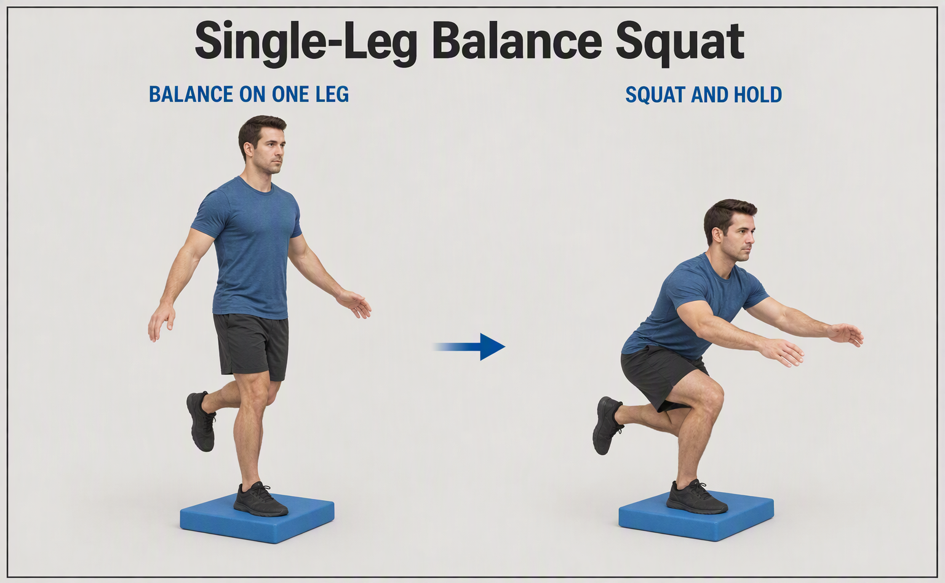
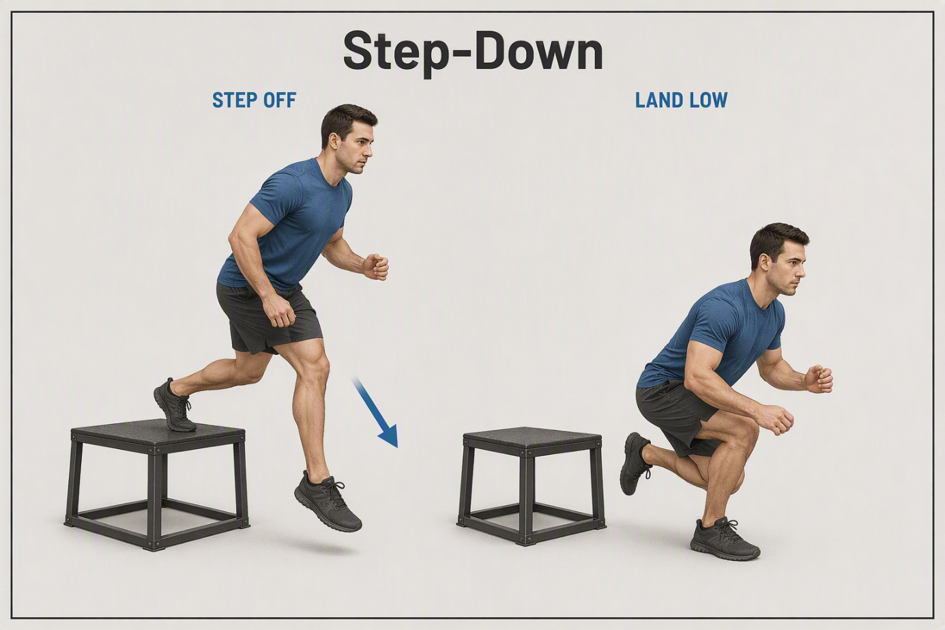
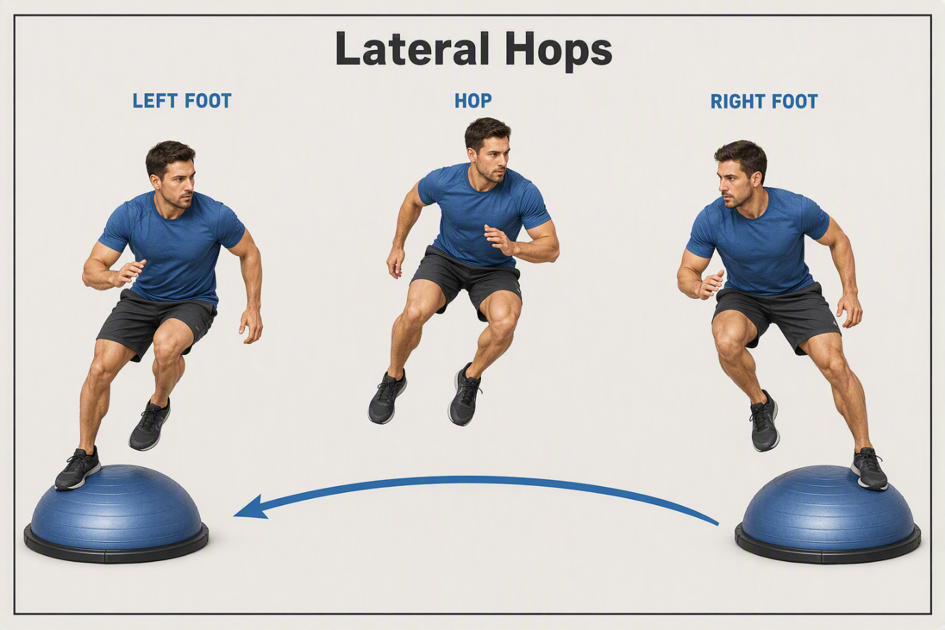
A good ski-specific strength session doesn’t need many exercises. I aim to include at least one from each of the following categories, and I try to make at least one exercise single-leg.
Agility & Balance
Backcountry skiing is never perfectly symmetrical and these exercises will not only build a stable base for the heavier exercises but will also matter a lot when the going gets tough and you’re not just shredding the silky stuff but just trying to survive the next turn in breakable crust or wind-affected snow.
Exercise examples:
Power
Even on long, calm days, you need short bursts of power—driving into or out of a turn, correcting a mistake or avoiding a hazard, landing small drops or jumps and powering through short, technical sections.
Exercise examples:

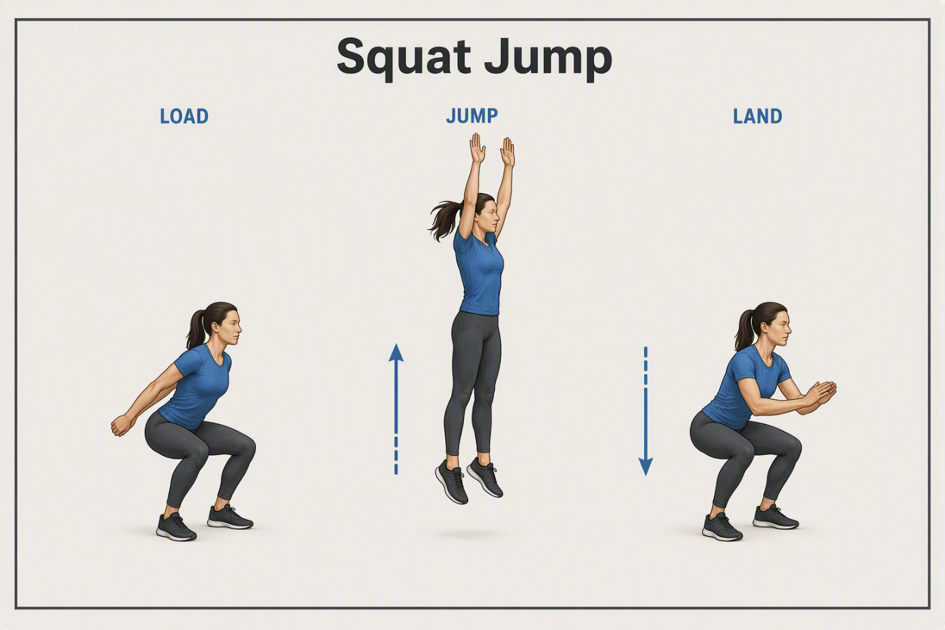
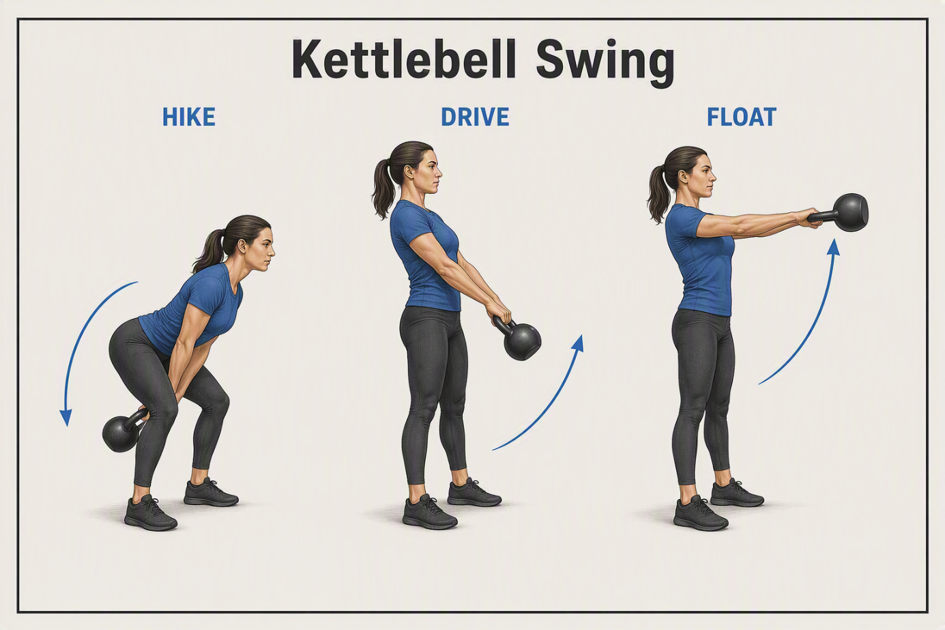
Keep reps low and quality high. Add weight to increase difficulty. For box and squat jumps a weight vest can be very useful but if you don’t have one, it is also possible to hold a kettlebell or medicine ball close to the chest.
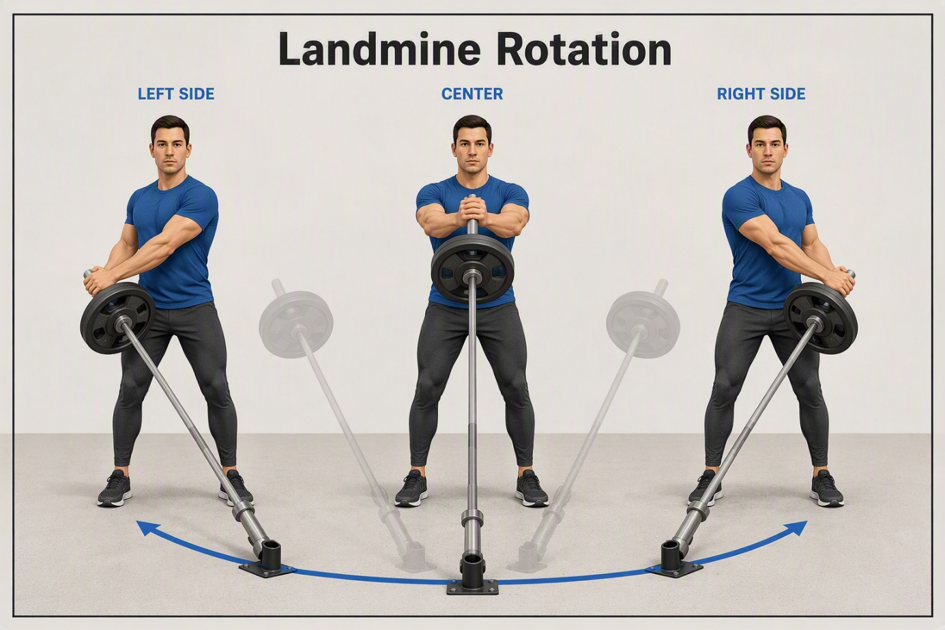
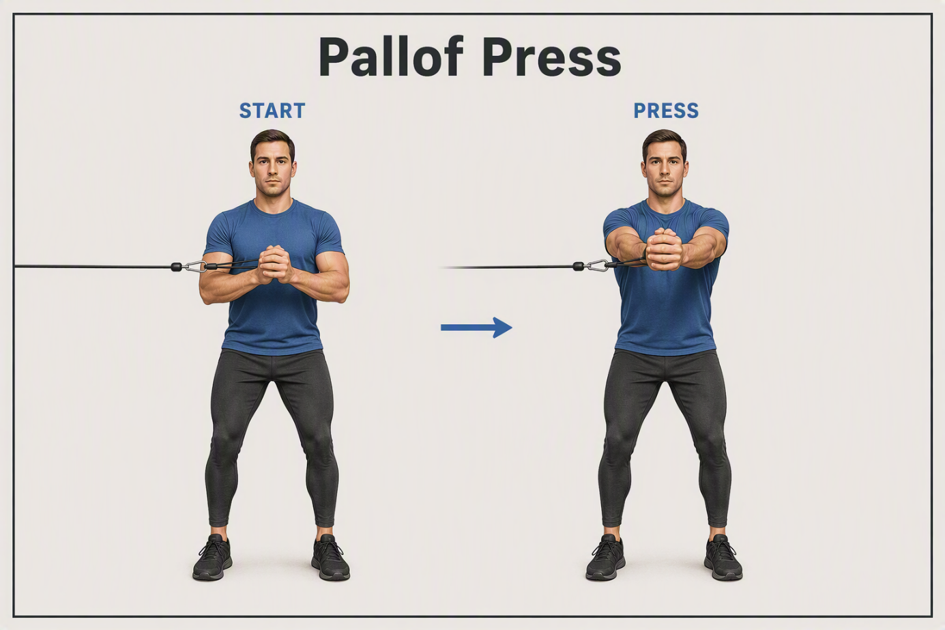
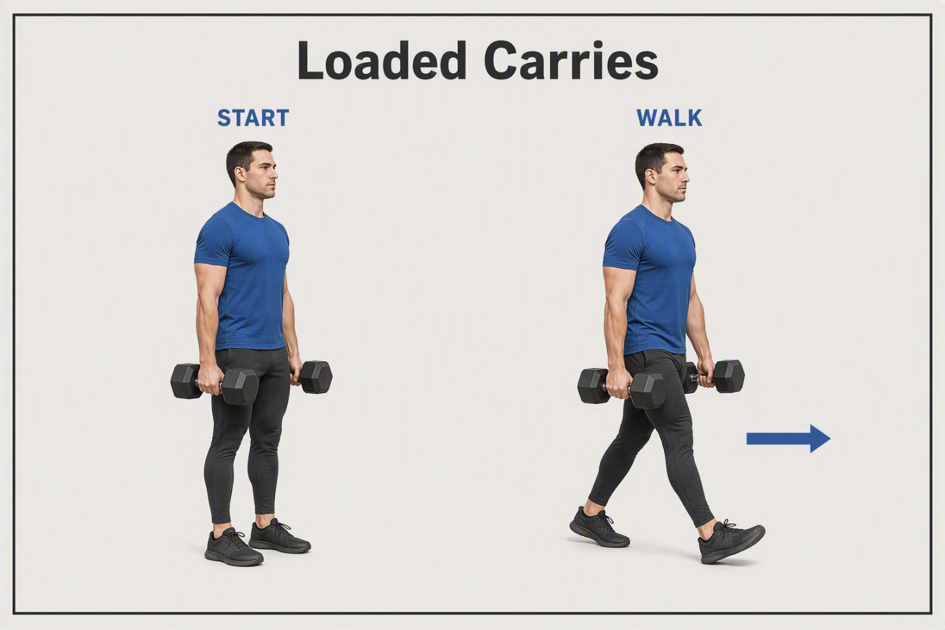
Core
Your core is the base on which all other movements are built off – it keeps you stable at speed, allows you to safely coordinate movement and will be the main system engaged to keep you from falling into dangerous body positions when conditions throw you out of balance.
Exercise examples:
Anterior Chain Strength (Quads)
This is both your climbing system on the way up and your braking system on the way down, especially important in heavy or variable snow and bumpy or steep terrain.
Exercise examples:
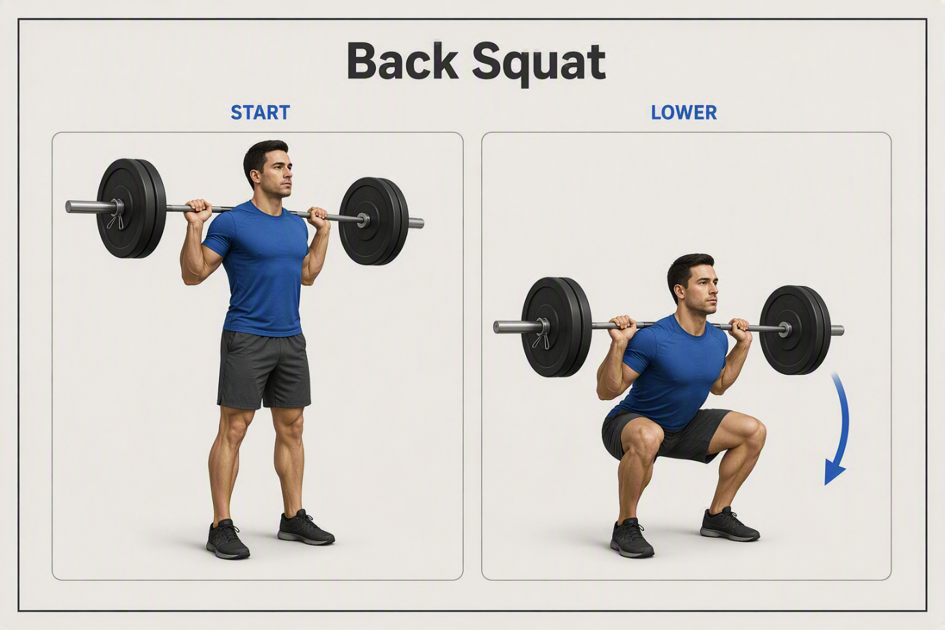

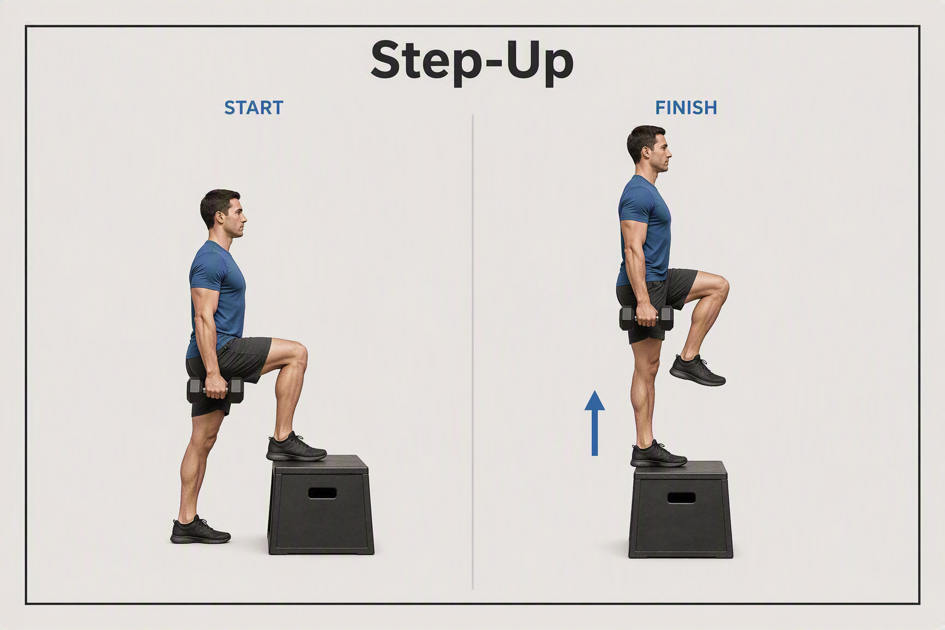
Posterior Chain Strength (Glutes & Hamstrings)
This is key for knee stability, hip control, and overall resilience. Without similar levels of strength and flexibility between the anterior chain (think front side of your body) and posterior chain (think backside of your body), you greatly increase your chance of injury.
Exercise examples:
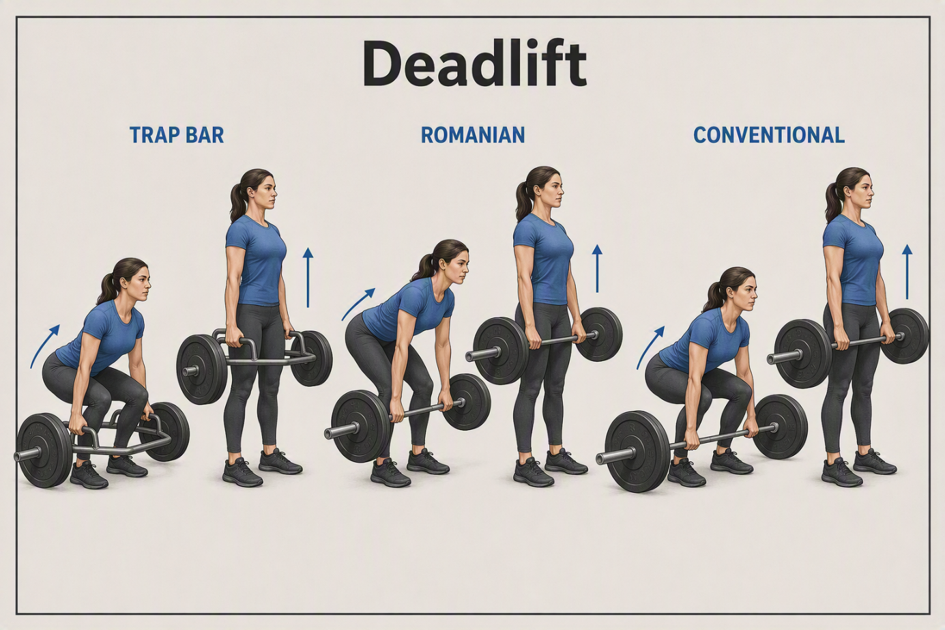
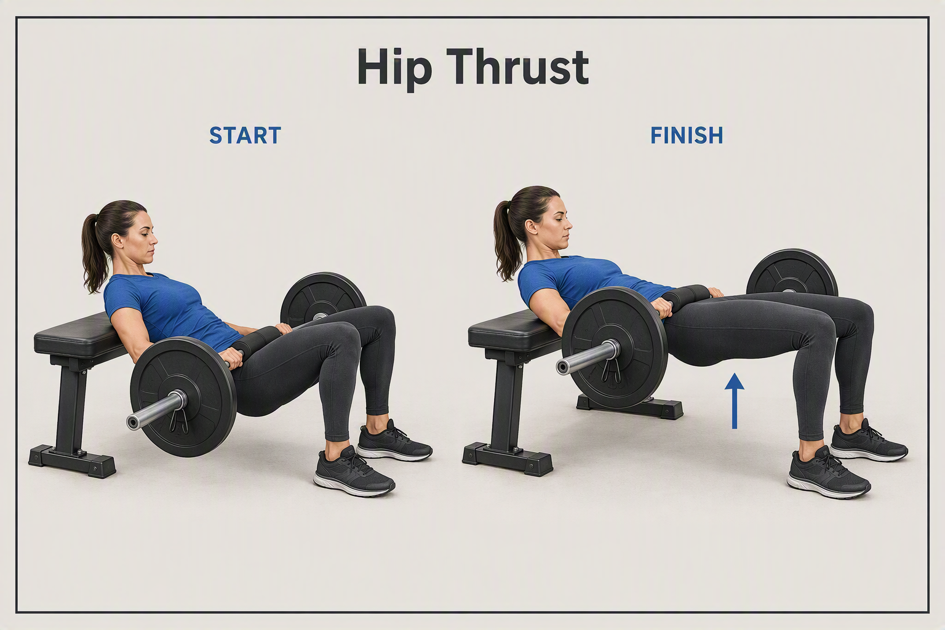
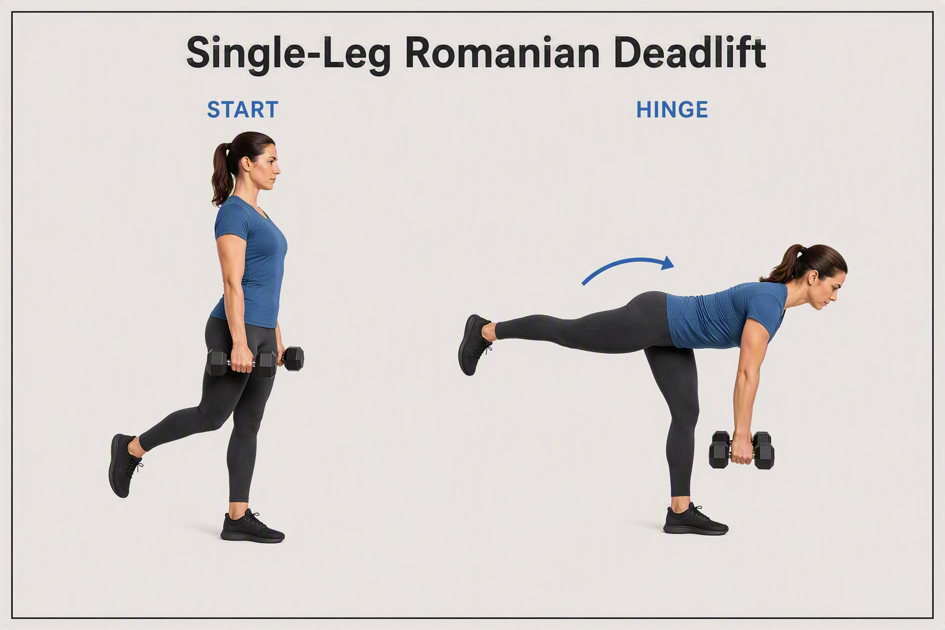
Don’t Skip Single-Leg Work
If there’s one thing many skiers underestimate, it’s single-leg strength.
Although good ski technique synchronizes both skis, your movements happen one ski (or leg) at a time, independent of one another—especially in variable snow and steep terrain.
Single-leg exercises:
Improve balance and increase recovery strength when thrown out of balance
Reduce side-to-side muscle imbalances that increase the chance of injury
Translate directly to skiing and set a foundation for solid technique
Split squats or single-leg deadlifts, for example, are simple and very effective.
How I Structure Strength Progression
You don’t need constant variation. Progress comes from doing the basics consistently and increasing resistance and intensity over time.
First: Learn the Movements
If you’re not used to these exercises:
Spend a few sessions with very light weight
Focus on control and technique
Don’t rush this phase
Phase 1: Base Strength
8-12 total sessions
3 sets × 8 reps
Use a weight you can control well
Finish each set with 2–3 reps left in reserve
Timing:
1 session per week = ca. 8 weeks
2 sessions per week = ca. 4 weeks
Even if you train more often, I wouldn’t shorten this phase below four weeks. Tendons and joints need time to adapt, especially when you’re also doing other things, like biking, running or skiing. Honestly, more than 2 sessions a week is probably unnecessary for most of us, and more than 3 is asking for trouble in this phase (unless you are adding variation to those training days).
Phase 2: Build Strength
Next 8-12 sessions
3 sets × 4–5 reps
Increase the weight
Each set should end close to exhaustion (You should feel like you could only do one more rep.)
Shoot for 2 sessions a week here.
Adjust the load as needed. If form breaks down, the weight is too heavy.
How Long Should a Session Take?
For most people: 30–45 minutes is plenty.
Warm up properly with a good dynamic warm-up that gets your heart rate up and prepares your muscles and joints for the movements you are going to do – approx. 10 min. – do the main work (30-45min) and get out. Remember, the goal is to support skiing, not compete with it.
You might be asking, where’s the conditioning in this routine? Well, remember rule number 1, keep it simple – use your outdoor days to work on conditioning (bonus if you work some extra short sessions into daily routines also, like running or biking to work or hitting the rowing machine for 10 minutes of intervals at the end of your strength training).
Flexibility is important also – if you do not have strength throughout the full range of motion you increase your potential for injury. So spend time doing some flexibility training as well – stretch after training and also on off-days. This can be everything from 10min before bed every day or yoga a couple of times a week – but don’t neglect this point or your other work will ultimately suffer!
Final Thoughts
With backcountry skiing, strength training is about staying reliable. Reliable legs, reliable balance, and a body that still works when the snow is bad and the day is long.
Keep it simple. Be consistent. And remember: Strong in the gym only matters if it makes you strong on your skis. Keep it functional. And no training routine that you don’t do will ever make you stronger, so make it fun.
If you want help creating fun, simple, effective and adapted training routines for your day-to-day skiing or long-term expedition goals, feel free to get in touch—or come ski with us and we can help you make it happen! info@madguides.no
See you in the mountains!

Comments